• Orders of £125+ in FULL SIZE, FULL PRICE, NON-DISCOUNTED perfumes include 3 complimentary samples.
Menu
Cart
Name Price QTY

Subtotal:
Tax included. Shipping calculated at checkout.


Complimentary samples accompany full-price orders only.

Discounted or promotional orders will NOT include samples.

View cart

Your cart is empty
COMPLETE YOUR OLFACTORY EXPERIENCE

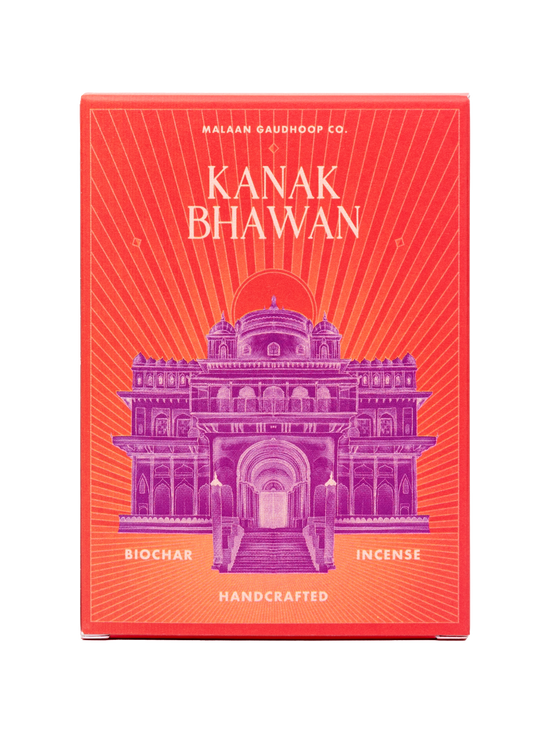
KANAK BHAWAN

Dhs. 35.00

SWARNA CHAMPA

Dhs. 35.00
SAINTE CELLIER

What startling things are these perfumes, baring teeth and pelty feline allure? 

Never less than mesmerising, Marlou’s perfumes explore the hinterlands of skin and ask us to consider if we have forgotten how to live with the intimacies of our own odours. We walk an uneasy path between desire and revulsion.

Read more

MARLOU

Filters
Sort by
Clear all

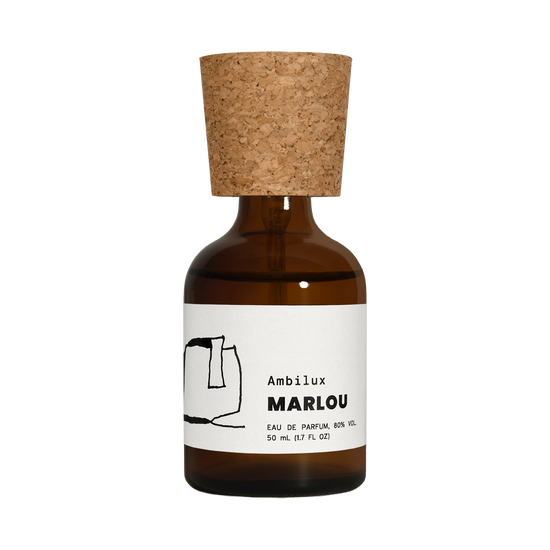
AMBILUX

From Dhs. 60.00

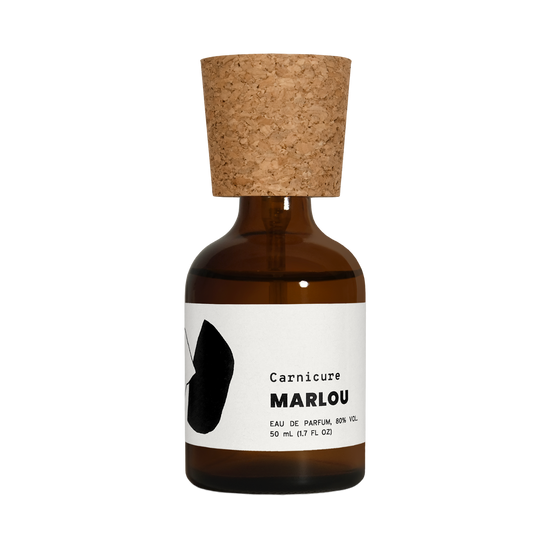
CARNICURE

From Dhs. 60.00

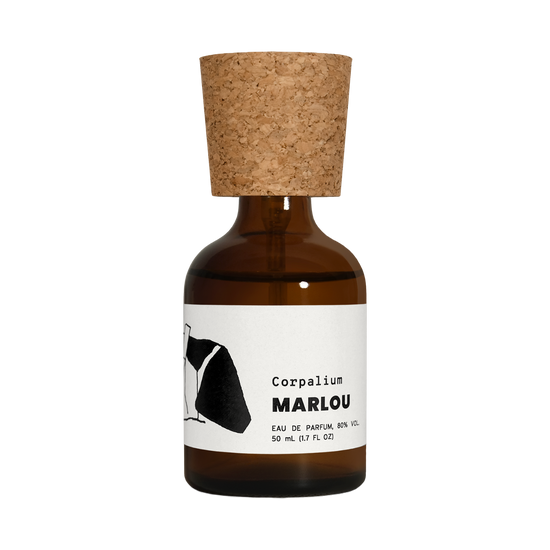
CORPALIUM

From Dhs. 60.00

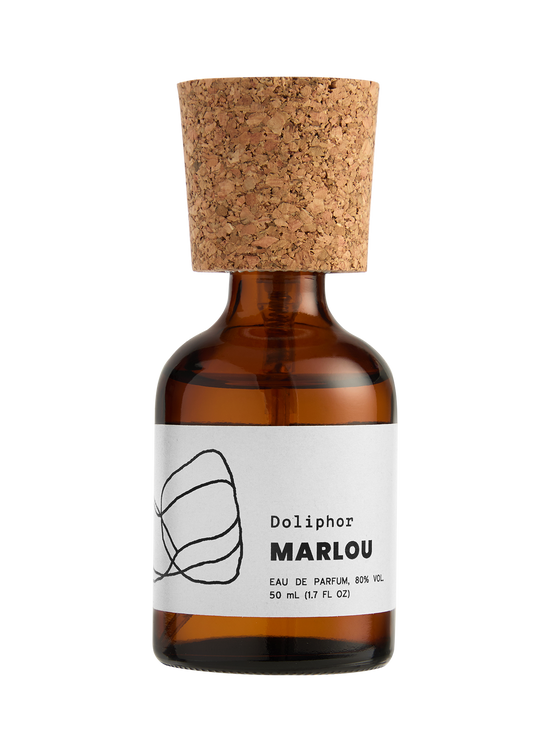
DOLIPHOR

From Dhs. 60.00

HÉLIODOSE

From Dhs. 60.00

POUDREXTASE

From Dhs. 60.00

MARLOU DISCOVERY SET

Dhs. 238.00

Marlou Perfume: When Fragrance Begins with the Body

Marlou perfume begins where conventional fragrance often tries to end: with the natural presence of the body. Created by Briac Frocrain, the independent French perfume brand treats skin not as a blank surface to be covered, but as part of the composition itself. Musk, warmth, salt, powder and animalic notes meet the wearer’s own odour, creating a personal olfactory identity that can feel different from one skin to another.

This gives Marlou perfumes an unusual place within French niche perfume and indie perfume. The house is interested in intimacy, imperfection and the social meaning of smell: what we choose to conceal, what we find sensual, and why an odour that attracts one person might unsettle another. Rather than polishing the body into abstraction, Marlou allows it to remain human.

Never Wholly Clean: Rethinking Animalic Perfume

Animalic perfume is often imagined as something aggressive, dirty or deliberately shocking. Marlou complicates that idea. An animalic fragrance can suggest warmed skin, damp hair, fur, sweat or the air left behind after physical closeness without ever smelling literally like an animal. At low volume, these effects may feel tender, familiar and almost comforting.

That ambiguity is central to Marlou’s olfactory perspective. Clean and unclean, attraction and repulsion, intimacy and exposure continually overlap. The provocative quality comes not from trying to offend, but from asking why modern perfumery so often presents clean skin as something odourless. Marlou instead treats the body’s imperfections as raw material for sensuality.

Musk, Civet, Costus and Indole: The Vocabulary of Intimacy

Marlou’s language is built from materials that can suggest the body without simply imitating it. Musk and ambrette create warmth, softness and the impression of living skin. Civet brings animal heat and tension. Costus can recall hair, fur or skin warmed by the sun, while cumin has a salty, perspiration-like quality that becomes remarkably human when carefully dosed.

Indole makes white flowers fuller, stranger and more bodily; castoreum can suggest leather, fur, smoke or the atmosphere of a stable. Yet these animal notes are not always feral. In different concentrations they can become powdery, milky, softly musky or almost clean. This is what makes a Marlou musky perfume or skin musk perfume so distinctive: sensual perfume here is less about conventional seduction than proximity. Even the most provocative perfume in the collection feels designed to be smelled on a person, not separated from them.

More Than a Clean Skin Scent

The familiar skin scent perfume usually speaks a language of white musk, fresh laundry and immaculate skin after a shower. Marlou starts there and refuses to stop. Skin can indeed be clean, but it can also be damp from a bath, warmed by sunlight, powdered before bed, salted with perspiration or carrying traces of flowers, wood, incense and yesterday’s fragrance.

That wider definition makes Marlou’s idea of intimacy more interesting. Many of the compositions remain close to the body, but closeness should not be confused with blandness. A skin scent can be milky, animalic, leathery or humid. Rather than filling a room, these perfumes often create an olfactive field around the wearer — something most clearly perceived by the person who comes close enough.

From Tender to Feral: How to Choose a Marlou Perfume

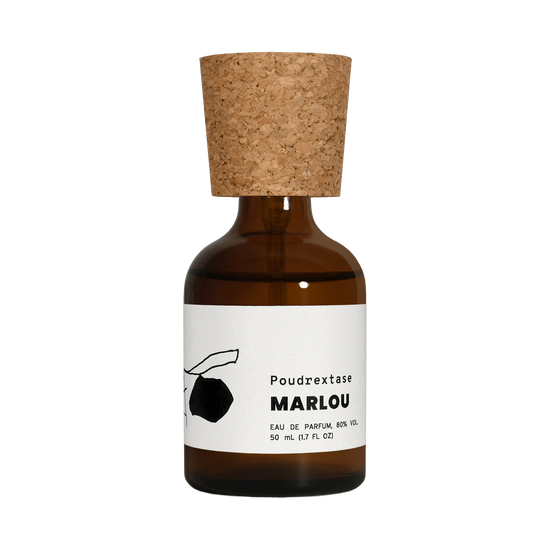
For the gentlest introduction, Doliphor explores milky, damp and almost clean skin, making it a good starting point if you are intrigued by Marlou but cautious about intense animalic notes. Poudrextase moves slightly further into the boudoir, where rice powder, rose and tonka acquire a faintly animal warmth.

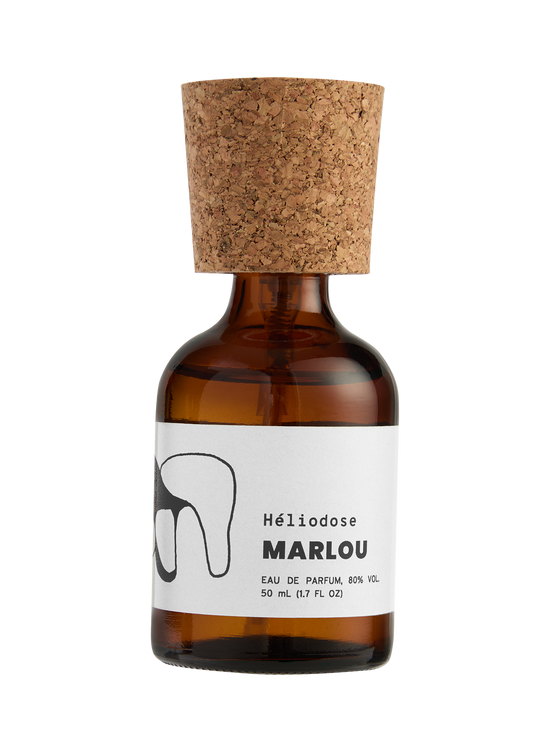
Héliodose feels more humid and sun-struck, pairing white florals and musk with the sensation of hot skin in summer air. Carnicure is darker and more vintage in mood, wrapping violet, ambered materials, musk and civet around a distinctly carnal core.

For something drier, Corpalium brings iris, ambrette, woods and castoreum into an austere leather-and-stable register. Ambilux sits at the most exposed end of the spectrum: salty, floral and intensely bodily, with cumin, immortelle and costus conjuring skin in the heat of attraction. The six niche perfumes form a progression rather than a test of bravery — from softness and powder to increasingly primal intimacy.

Why Marlou Must Be Tested on Skin

Marlou is especially difficult to understand from a blotter alone. Body heat and individual skin odour can amplify or soften its musk, milk, cumin, costus and animalic facets, meaning the same fragrance may feel cleaner, saltier or more carnal from one wearer to another. Apply lightly, avoid testing several Marlou perfumes at once, and give the scent several hours before deciding where it sits on your own skin.

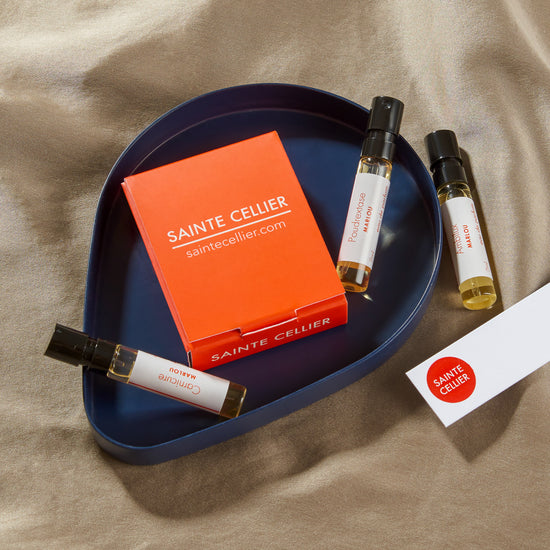
For anyone exploring Marlou perfume in the UK, sampling is the most useful way to begin. Individual samples allow you to spend proper time with one composition, while the Marlou Discovery Set offers a broader route through the collection before blind-buying full-size bottles. With a perfume brand so concerned with personal olfactory appearance, the sample service is not simply convenient — it is part of understanding the work.

The Sainte Cellier Edit: Six Expressions of Marlou

Doliphor is the quietest expression of Marlou’s body-centred perfumery. Saliva and wheat flower lead into bath towel and a milky veil, before carrot seed, costus, cumin and musk appear underneath. The effect is intimate and strangely familiar: warm clean skin, humid bathroom air and fabric that has not yet fully dried.

Poudrextase enters a more decadent boudoir. Rice powder, rose, cypress, tonka bean and civet create cosmetic softness with an increasingly bodily undertone — powder applied to skin that refuses to remain entirely pristine.

Héliodose turns the body towards sunlight. Galbanum, tiaré, indole and musk suggest white flowers, humid heat and skin warmed through by a languid summer afternoon. It is sensual without relying on conventional sweetness.

Carnicure brings orange blossom and violet into patchouli, sandalwood, labdanum, musk and civet. Ambered, musky and faintly feral, it balances an almost vintage elegance with the sense of something alive moving beneath the perfume.

Corpalium is drier and more austere. Iris, ambrette and fenugreek meet guaiac wood, cedar and castoreum, evoking old timber, tobacco, leather and a delicate equine accord. Its animalic character feels textural rather than loud.

Finally, Ambilux pushes Marlou’s study of skin furthest into the heat. Pink pepper, cumin, helichrysum, ylang-ylang, incense and costus create something salty, floral and deliberately intimate: a scent of sun, perspiration, sea-damp hair and physical closeness.

Together, the six fragrances reveal Marlou not simply as an animalic perfume brand, but as a study of the body through scent. Softness and discomfort, clean skin and primal odour, powder and sweat are allowed to coexist — making imperfection itself part of the perfume.

FAQ

What makes Marlou perfumes so unusual?

Marlou is a French niche house founded by Briac Frocrain and Ophir Darki in 2016, working out of Paris. The brand is built around a specific philosophical project: exploring the carnal and animalic registers of perfumery that mainstream fragrance has largely abandoned. Where most contemporary perfume positions itself against the body (covering, masking, perfecting), Marlou positions itself with the body, asking the wearer to consider their own relationship to the smells of human skin, sweat, hair and proximity. The brand draws from research, collaboration with talented perfumers, and a multidisciplinary approach that incorporates architecture, design, music, and visual art. Their work has been featured in The New York Times and Dazed and Confused, and the brand has held exhibitions in Paris and beyond.

What do Marlou fragrances actually smell like?

The Marlou collection moves across a spectrum from softest to most challenging. Doliphor is the softest of the line, capturing the milky, gauzy register of warm clean skin and damp bathroom air, with carrot seed, costus and cumin. Poudrextase sits next, built on rice powder, blushed rose petals, tonka bean and a touch of civet. Héliodose evokes sun-warmed flesh, indolent heat and the humid sensuality of poolside vacations. Carnicure is the original Marlou perfume, leaning into deeper animalic intensity. Corpalium is more austere, with iris rhizome, ambrette and an equine-stable register. Ambilux is the most challenging of the line, exploring the glistening register of skin in the heat of attraction with the boldest animalic register. Across the collection, the materials work to suggest second-skin intimacy rather than projecting outward.

Are these perfumes more musky or more clean?

Both, in ways that genuinely complicate the distinction. Doliphor sits in the clean-skin register, evoking damp bathroom air and the wheaten scent of warm skin after washing. Poudrextase is softly powdered, rice-coloured, gentle. The other four perfumes lean musky in different ways: Corpalium with its dry equine and iris rhizome register, Héliodose with humid sun-warmed sensuality, Ambilux with skin in the heat of attraction, Carnicure with deeper animalic intensity. The Marlou project is partly about questioning the clean/musky binary itself, asking the wearer to consider why clean is so culturally privileged and what we lose when we refuse the body's actual register.

Who would enjoy wearing Marlou fragrances?

Wearers who are curious about perfume's capacity to engage with the body rather than mask it. The collection rewards those drawn to thoughtful, conceptually-rich compositions and to brands exploring intimacy, sensuality, and the cultural meanings of scent. Marlou suits anyone interested in the work of philosophically-minded indie houses, and anyone who wants to ask interesting questions about what perfume is allowed to do.

Are Marlou perfumes bold or more intimate on the skin?

Intimate, almost always. The Marlou project is structurally a close-to-skin one — these are not perfumes built for projection or for filling a room. They are second-skin compositions, meant to be discovered by someone close enough to read your scent rather than announce it from across a space. This is part of what makes them distinctive: they ask for proximity rather than performing for distance.

Do these scents feel more animalic or soft and warm?

The collection covers both registers and often holds them in the same composition. Poudrextase and Doliphor sit in the softer, warmer end of the spectrum, with rice powder, tonka, milky skin and laundry musk registers. Corpalium, Héliodose, Ambilux and Carnicure move further into animalic territory, each in its own way. What unifies the line is Briac Frocrain's interest in the body as a site of olfactory truth, and his refusal to choose between comfortable and carnal. The animalic notes in the Marlou perfumes are not shock effects; they are part of a serious editorial inquiry into how we relate to our own scent.

Which Marlou fragrance is a good one to start with?

Doliphor is the gentlest of the six and the easiest entry point, with its milky, clean-skin register and quiet, almost meditative composition. Poudrextase is also a reliable starting place, particularly for those curious about animalic perfumery but wanting a softer introduction (rice powder, rose, tonka, with just a touch of civet). From either of those, the rest of the collection's range opens up. The Marlou Discovery Set is also available for those who want to experience the full range of Briac Frocrain's olfactory inquiry in one place.

Are these perfumes meant for everyday wear or special moods?

Both, depending on the perfume and the wearer's relationship to it. Doliphor and Poudrextase integrate easily into daily life and reward the kind of long-term wearing that perfumes designed for intimacy actually benefit from. Corpalium, Héliodose, Ambilux and Carnicure may suit specific moods or moments more than universal daily rotation, with their more expressive animalic registers. As with much of Marlou's work, the collection rewards intentional use — choosing a scent that matches the mood and moment is part of the pleasure of wearing them.

How quickly will I receive my perfume after placing an order?

Orders are prepared by hand, and dispatch usually takes between three and five working days depending on what the order contains. Samples are hand-poured in small batches, which can take additional time.

Within the UK, orders are sent with Royal Mail using tracked services. Most parcels travel on the Tracked 48 service, although special arrangements can be made on request and may incur a surcharge.

International orders, including samples, are shipped with FedEx. Delivery times vary depending on destination and customs processing.

Can I return a perfume if I don't like the scent?

Perfume is considered a hygiene-sensitive item, and under UK Consumer Contracts Regulations it cannot be returned once opened. This applies whether the product is wrapped in cellophane, sealed with a sticker, or simply packaged in a way that makes clear it is unused. Once a fragrance has been opened, sprayed or handled beyond inspection, it cannot be resold and is therefore not eligible for return based on personal preference.

If you would like to explore a scent before committing to a full-size bottle, I offer individually hand-poured samples so you can experience how it develops on your own skin.

Unopened perfumes may be eligible for return within the statutory period, and I am always here to help if an order arrives damaged, faulty or incorrect. Please contact me at bb@saintecellier.com for assistance.