Unique Perfume: When an Idea Becomes a Scent
A unique perfume often begins somewhere other than the traditional pursuit of smelling beautiful. It may start with a memory, a landscape, a material or an impossible world: rain striking hot earth, fog suspended above water, cold metal, a diving suit, diesel fumes or the humid air of a glasshouse. The perfumer’s subject becomes an experience rather than a familiar fragrance family.
This is what gives unique perfumes and unusual perfumes their character. Their originality does not come from strangeness for its own sake, but from a strong creative idea translated into scent. Bergamot, musk, amber, woods or florals may still appear, yet they are used to construct something less literal: a place, a texture, a temperature or a moment that exists somewhere between memory and imagination.
Beyond the Note Pyramid: How Abstract Perfume Builds a World
With an abstract perfume, a conventional list of top, heart and base notes can only tell part of the story. Perfumers may create accords that suggest wet soil, salty skin, ozone, stone, ocean depth, smoke or technical materials that have no single natural extract. Familiar ingredients become components of an illusion.
A concept perfume is therefore best approached as an atmosphere. Musk can suggest skin rather than simply “musk”; woods may become driftwood or damp architecture; amber can create heat, mineral glow or depth. The individual notes matter, but their purpose is to build a world that may not literally exist in nature. Like a film set or a piece of fiction, the composition feels convincing because every detail serves the same idea.
Beautiful, Strange or Both? The Appeal of Experimental Perfume
Experimental perfume does not have to sacrifice beauty or wearability in order to be challenging. The most compelling compositions balance an unusual premise with proportion, texture and movement on skin. Something can evoke smoke, static, cannabis or latex and still feel elegant; its projection and intensity depend on how those effects are structured, not simply on how provocative the idea sounds.
This is where avant garde perfume becomes a form of artistic expression. An avant garde fragrance allows the perfumer to work almost like a painter, filmmaker or writer, using aroma to create tension, narrative and atmosphere. Artistic perfume may provoke, amuse or unsettle, but the intention is not simply to be eccentric. The best artistic perfumes leave an image behind—something remembered long after the individual notes become difficult to name.
Rain, Static, Skin or Smoke: Choose the World You Want to Wear
Choosing an unusual perfume becomes easier when you begin with the world you want to inhabit rather than a single ingredient. If natural atmospheres draw you in, look towards rain, soil, moss, roots and vegetation. For something marine, explore salt, ozone, wet skin, cold water and weathered woods.
More surreal compositions may suggest fog, smoke, static or sounds translated into olfactory form. Provocative scents can move towards cannabis, diesel, latex or metallic accords, while others remain quietly abstract through mineral textures, unusual musks and elusive woody notes. The question is less “Which note do I like?” and more “What atmosphere do I want to carry with me?”
How to Smell a Perfume That Refuses Easy Answers
Unusual perfumes reward a different kind of attention. Rather than trying to identify every note immediately, notice the first image the fragrance creates. Does it feel cold or warm? Smooth or mineral? Damp, airy, smoky, synthetic, vegetal or skin-like? Smell it again after an hour, then near the end of the day. Whether the fragrance is an eau de parfum or a parfum, its concept often becomes clearer as the composition moves through the drydown.
Sampling is especially useful with experimental perfumery because a blotter cannot show how an abstract accord changes against skin. For those exploring unusual perfumes in the UK, Sainte Cellier offers samples from its selection of independent perfume houses, making it possible to live with a composition before choosing a full bottle.
The Sainte Cellier Edit: Unique Perfumes Worth Experiencing
For a study in rain and earth, Petrichor by Marissa Zappas Perfume translates the scent of water touching dry ground through damp earth and lemon, followed by immortelle, iris and vetiver. Ambergris, sandalwood, moss and musk give the landscape warmth once the initial rainfall begins to settle.
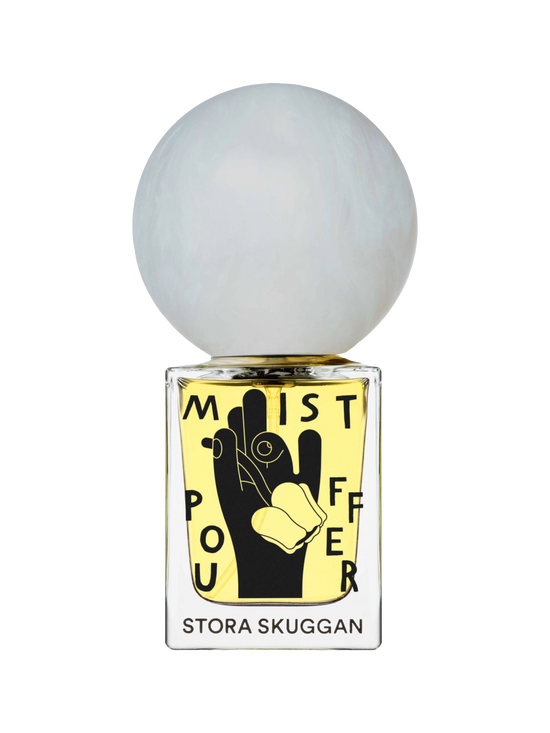
Mistpouffer by Stora Skuggan moves into stranger territory. Immortelle and bergamot drift through fig leaf, pine and ozone before smoke, vetiver, malt sugar and cyperus appear beneath the mist. Inspired by a mysterious booming sound heard over water, it feels less like a conventional fragrance than weather wrapped around an unanswered question.
L’Eau Très Mer by Rubini Profumi takes the idea underwater, combining Caribbean fruits and salty skin with long pepper, rum and an accord recalling a diving suit. Tobacco, marine woods and oceanic depth turn the scent into something humid, bodily and immersive.
For something deliberately provocative, Sour Diesel by Serviette pairs rhubarb and pink pepper with geranium, juniper and kush before settling into patchouli, cedar and sandalwood. Its green, woody structure carries a cannabis-like, faintly fuelled edge without reducing the composition to novelty.
Water Me by TALE Parfum offers another form of abstraction: moss, limestone and dew-covered leaves meet ozone, oxidised petals and cyclamen root, with amber, cedar, oak and earth underneath. The effect is a humid glasshouse, wet stone and vegetation warmed slowly by sunlight.
Together, these fragrances show the breadth of Sainte Cellier’s Conceptual & Abstract edit. Each begins with an idea strong enough to reshape familiar perfumery materials, presenting a unique perfume not as a gimmick but as an invitation to wear a place, a memory or an imagined world on skin.